How to Grow as a Solopreneur in 2026: 12 Revenue Strategies That Don’t Require a Team
SAASGROWTH
12/16/20255 min read


Solopreneurship has grown faster in the last three years than in the previous decade. Some Industry Reports show: millions of people are running highly profitable one-person businesses, and a rising share of them are earning over $100,000 per year. At the same time, most solopreneurs say their biggest challenge is not skill or motivation-it’s building predictable revenue without a team.
This gap is exactly why growth often feels harder than it should. You’re capable, you’re motivated, and you deliver good work, yet scaling feels slow because the systems underneath your business are not designed for clarity or leverage.
These 12 strategies are built from modern GTM principles, real solopreneur data, and insights we work with daily at BriskFab while helping tech and SaaS founders.
Let’s walk through them, one by one.
1. Start with a clear one-line positioning statement
A simple, outcome-focused positioning line helps people quickly understand your value. When your message is clear, everything else-content, outreach, referrals, and sales-becomes easier.
For example:
“I help early-stage B2B founders build predictable revenue systems using modern GTM and AI automation.”
Positioning is the foundation. If this is unclear, every other strategy becomes heavier than it needs to be.
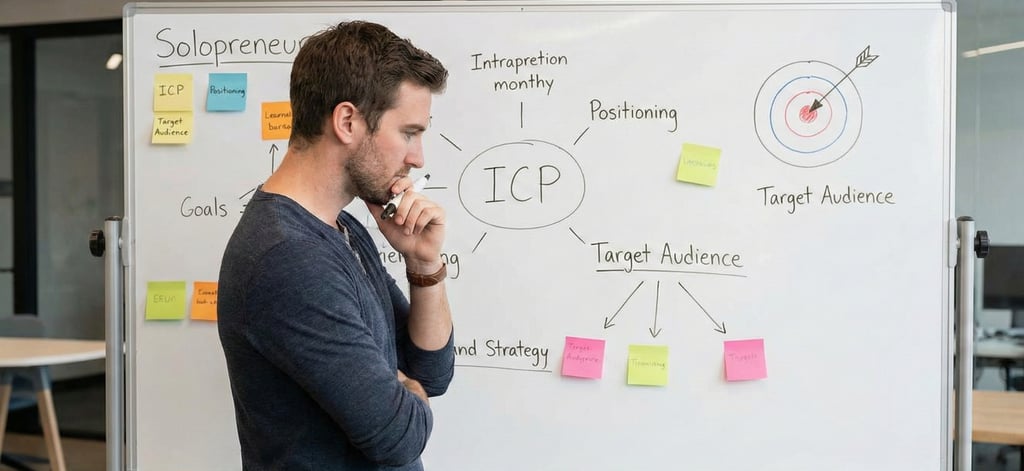
2. Define a narrow, practical ICP
Trying to serve everyone leads to inconsistent results. Instead, define a specific customer segment with a well-defined problem. This helps you create content they relate to, offers they understand, and a brand that feels relevant.
A more focused ICP could be:
“Bootstrapped SaaS founders doing $20k–$50k MRR who need a working outbound engine to grow faster.”
The narrower the audience, the stronger the connection.
If you’re unsure how to define your ICP, BriskFab can help you build a clear audience map and messaging foundation. Learn more with our expert!

3. Build a simple, outcome-driven offer
Productized offers work well because they reduce confusion. When people know exactly what they are buying, sales cycles become shorter and trust increases.
A strong offer should:
Address one specific problem
Provide a clear process
Deliver a measurable result
Have a fixed timeline or structure
Examples include messaging workshops, GTM sprints, AI automation setup, or done-for-you lead generation packages.
4. Protect your time with a structured rhythm
Solopreneurs juggle many responsibilities. Without a time system, tasks pile up and marketing becomes inconsistent. A weekly structure helps:
Allocate deep work time for delivery
Reserve blocks for marketing and content
Keep one block for sales
Maintain a small window for admin
Think of your week as a routine rather than a to-do list. Structure reduces overwhelm and increases focus.
5. Choose one primary acquisition channel
Instead of spreading yourself thin, pick the platform where your ICP spends most of their time. For B2B solopreneurs, LinkedIn is usually the best place to start. Creators may prefer Instagram or TikTok. Developers often engage on X and specialized communities.
Master one channel before expanding. Consistency on a single platform always beats scattered activity across many.
Need help identifying the right channel and content strategy for your business? BriskFab offers GTM guidance tailored to solo founders.


6. Use content as a long-term trust builder
Content is not about going viral. It’s about building trust over time. You can follow a simple structure to keep it manageable:
Share insights from recent work
Show frameworks or templates you use
Highlight wins and results
Offer practical tips your audience can apply
Even one or two pieces per week can significantly improve your visibility and credibility.
7. Build and own your email list
Your email list is one of your most valuable assets because you control it. Platforms change, but your list stays. It also converts far better than most social channels.
You only need a simple system:
A helpful lead magnet
A clean landing page
A short welcome sequence
One email every one to two weeks
Email helps nurture long-term relationships, especially for B2B buyers.
8. Apply light SEO focused on high-intent searches
SEO doesn’t need to be complex. Solopreneurs can achieve strong results with just a few well-planned pages that answer specific, real problems.
Examples of high-intent topics include:
“How to fix outbound for early-stage SaaS”
“Simple GTM plan for startup founders”
“AI automation for small B2B teams”
Create around 6–8 pages on topics closely related to your offer. Over time, these compact pages can build a surprising amount of organic traffic.
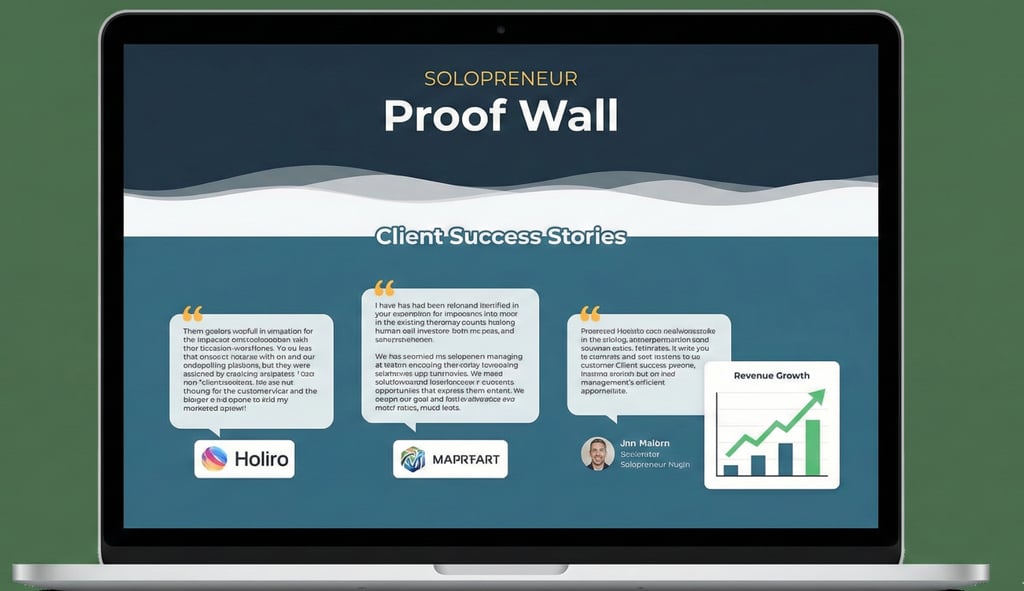
9. Create your proof wall
People make buying decisions based on trust, and trust comes from proof. Start documenting:
Testimonials
Screenshots
Case studies
Before/after examples
Wins from your own experiments
Your proof wall should appear on your website, LinkedIn profile, outreach emails, and even proposals. It quietly builds confidence for your prospects.
10. Develop a simple referral engine
Referrals are one of the highest-quality lead sources for solopreneurs. But instead of waiting for them, make referrals a predictable part of your business.
After a successful project, simply ask:
“If you know another founder facing a similar challenge, feel free to introduce us.”
No pressure. No big incentives. Just a prompt that keeps your pipeline healthy.
11. Borrow audiences through collaborations
You don’t need a large personal following to grow. Instead, you can collaborate with others who already speak to your ICP. Options include:
Guest newsletters
Podcasts
Co-hosted workshops
LinkedIn Live sessions
Founder communities
These partnerships help you reach new people without heavy marketing spend. They also increase trust because you’re endorsed by someone your audience already respects.
12. Use AI and automation as your leverage tool
AI has become a practical, essential advantage for solopreneurs. It allows you to automate repetitive tasks, speed up execution, and improve decision-making with very little cost.
You can automate:
CRM updates
Outreach personalization
Content drafting
Data cleanup
Scheduling
Reporting
This is one of the fastest ways to reclaim time and operate like a small, efficient team-even if you are just one person.
Final Thoughts
Scaling a solo business in 2026 isn’t about running harder. It’s about building clarity, choosing the right channels, and using leverage wisely. When you combine a strong positioning line, a focused ICP, a productized offer, consistent content, strategic collaborations, and smart automation, growth becomes much more predictable.
Start small. Pick one strategy, implement it this week, and let the momentum build.
If you’d like help designing your GTM system, strengthening your content engine, or using AI to scale your revenue as a solopreneur, BriskFab is here to support your growth-all with clarity, simplicity, and practical execution.
FAQ’s
1. How can a solopreneur grow their business in 2026?
A solopreneur can grow by having clear positioning, a focused ICP, a simple offer, one main marketing channel, and basic AI automation. These steps help create predictable revenue without needing a big team.
2. What is the best marketing channel for solopreneurs?
The best channel depends on your target audience.
Search-focused buyers → SEO and Google
B2B buyers → LinkedIn and email
Community-driven buyers → niche groups and podcasts
Choose one channel that matches how your customers find solutions and stay consistent.
3. What is a productized offer?
A productized offer is a fixed-scope service with a clear process, clear price, and clear outcome. It is easier for clients to understand and helps solopreneurs sell and deliver more efficiently.
4. Is SEO useful for solopreneurs in 2026?
Yes. SEO works well when you create a few high-intent pages that answer specific problems your ideal clients search for. This brings organic leads without high marketing spend.
5. How can AI help solopreneurs grow faster?
AI helps solopreneurs by automating tasks like outreach, content drafts, CRM updates, scheduling, and reporting. This saves time and makes it easier to scale without hiring a team.